
From Engineering Problem to Practical Solution
This page explains how an engineering discussion can move from first conversation to delivery, documentation, and follow-up support.
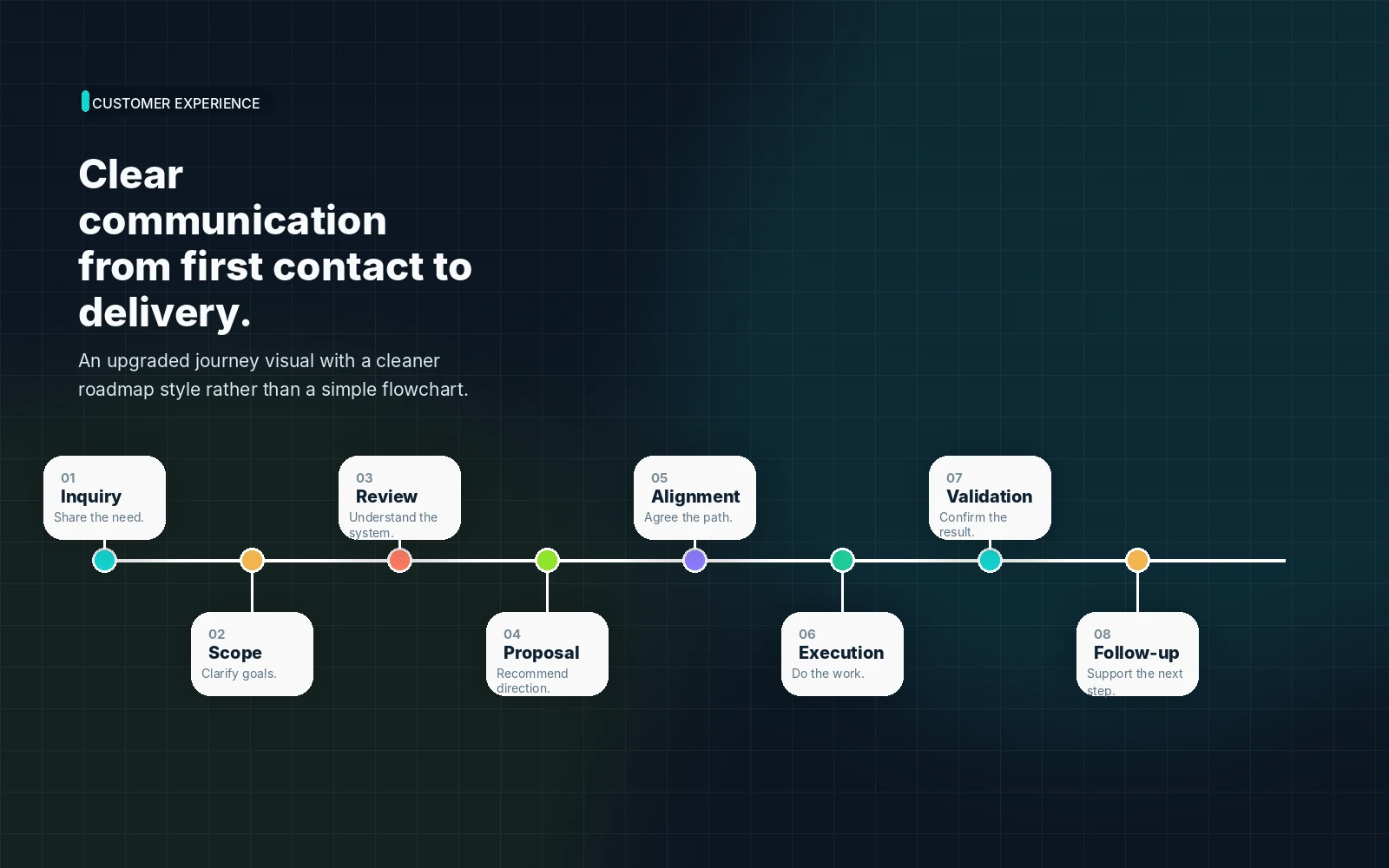
A customer-oriented process
The customer journey is designed to create clarity. Instead of jumping to conclusions, the process encourages listening, review, assessment, solution definition, testing, and knowledge transfer.
- Clear communication at every stage
- Practical scope and expectations
- Structured engineering thinking
- Documentation and follow-up
01 — Discover
The customer explains the problem, what has been observed, and why it matters. This stage focuses on listening and clarity.
02 — Consult
Technical requirements, desired outcomes, and practical limitations are discussed. This helps align scope with need.
03 — Assess
Relevant equipment, drawings, existing data, operating conditions, or maintenance context are reviewed before proposing action.
04 — Propose
A practical path is defined: solution concept, scope, deliverables, and timeline.
05 — Implement
The engineering solution is executed or supported in a structured, documented way.
06 — Test
Performance or intended function is reviewed to verify whether the proposed approach works as expected.
07 — Deliver
Final documentation, interpretation, and knowledge transfer are delivered clearly so the customer can use the outcome.
08 — Support
Follow-up is available after completion to help ensure understanding and support next-step improvements where needed.
Post-Project Feedback Interface
Feedback helps improve future engineering work and overall customer experience.