
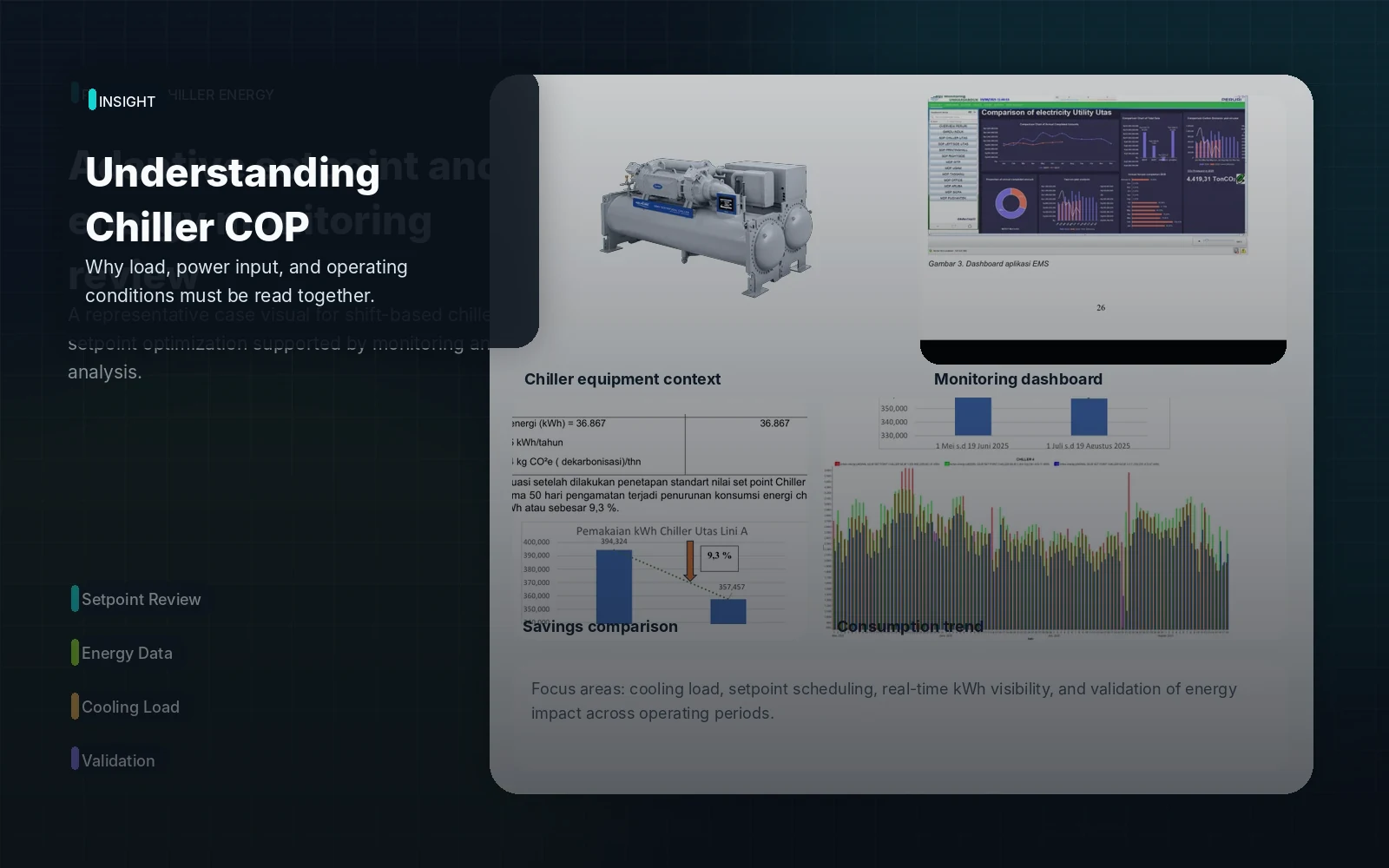
ChillerCOP
Understanding Chiller COP
How cooling capacity and power input connect in an engineering review.
Read insightShort educational engineering articles with original technical visuals to support understanding, not generic content.
How cooling capacity and power input connect in an engineering review.
Read insight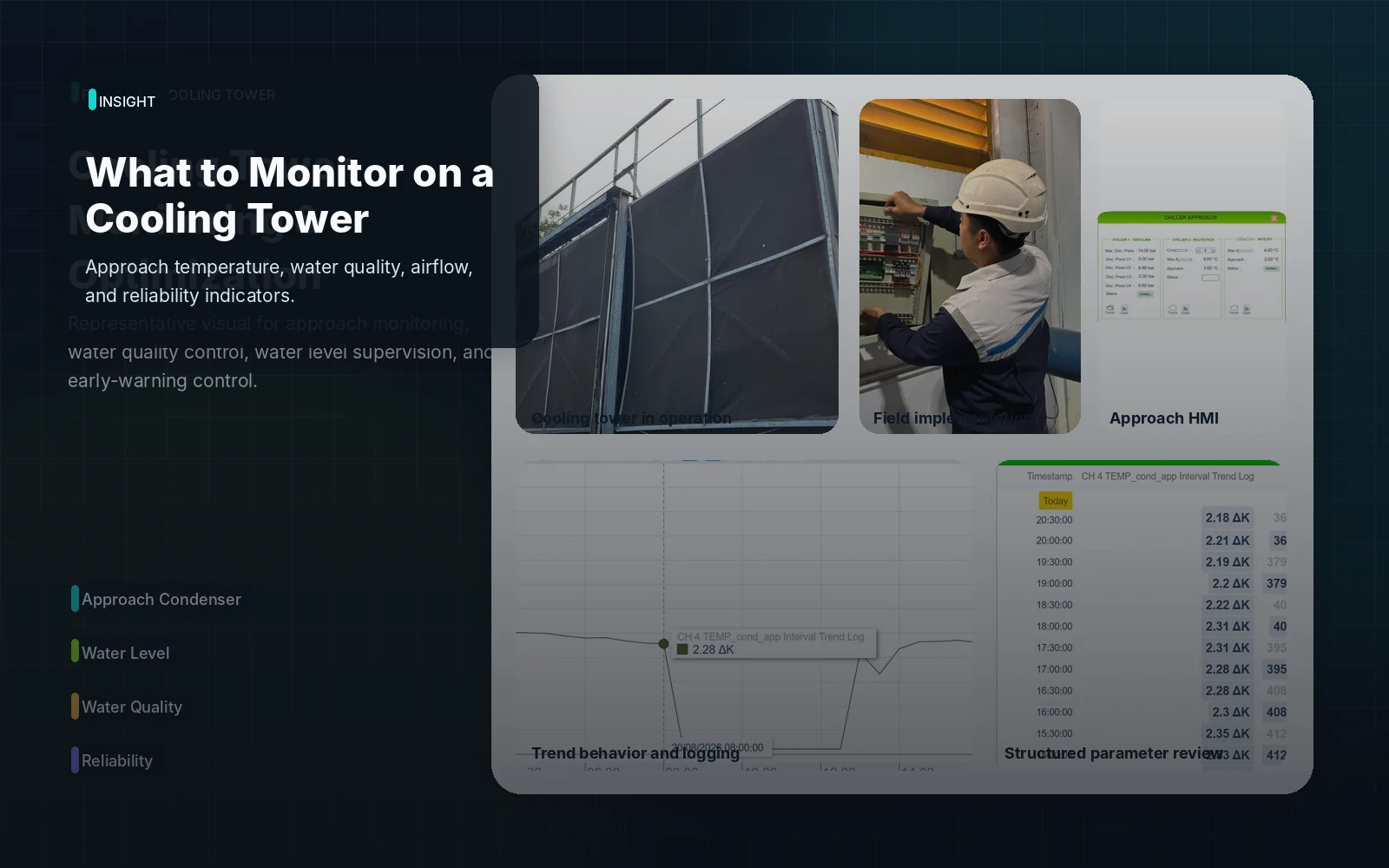
Approach temperature, airflow, water quality, and why they matter.
Read insight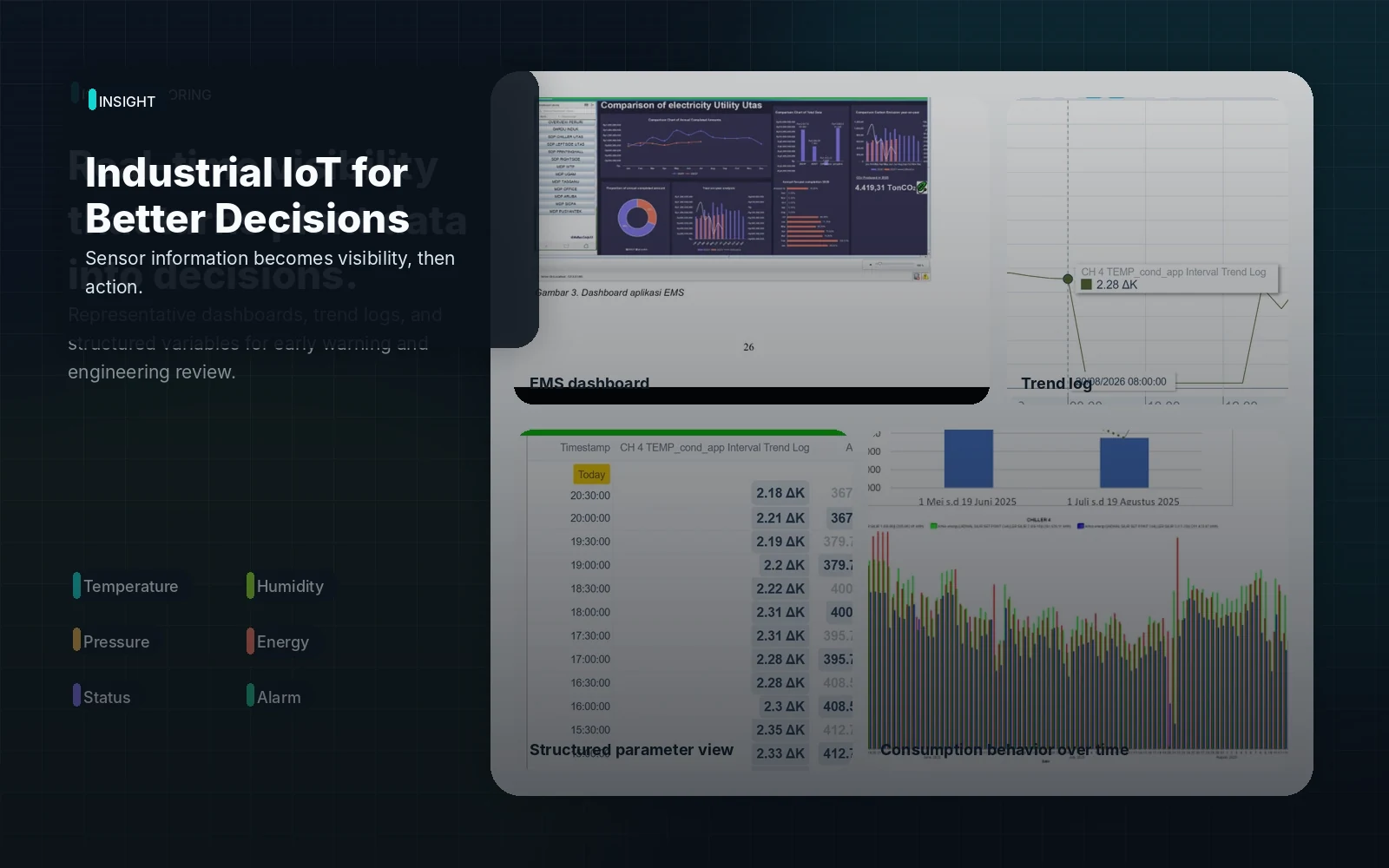
How sensor information becomes visibility and then usable action.
Read insight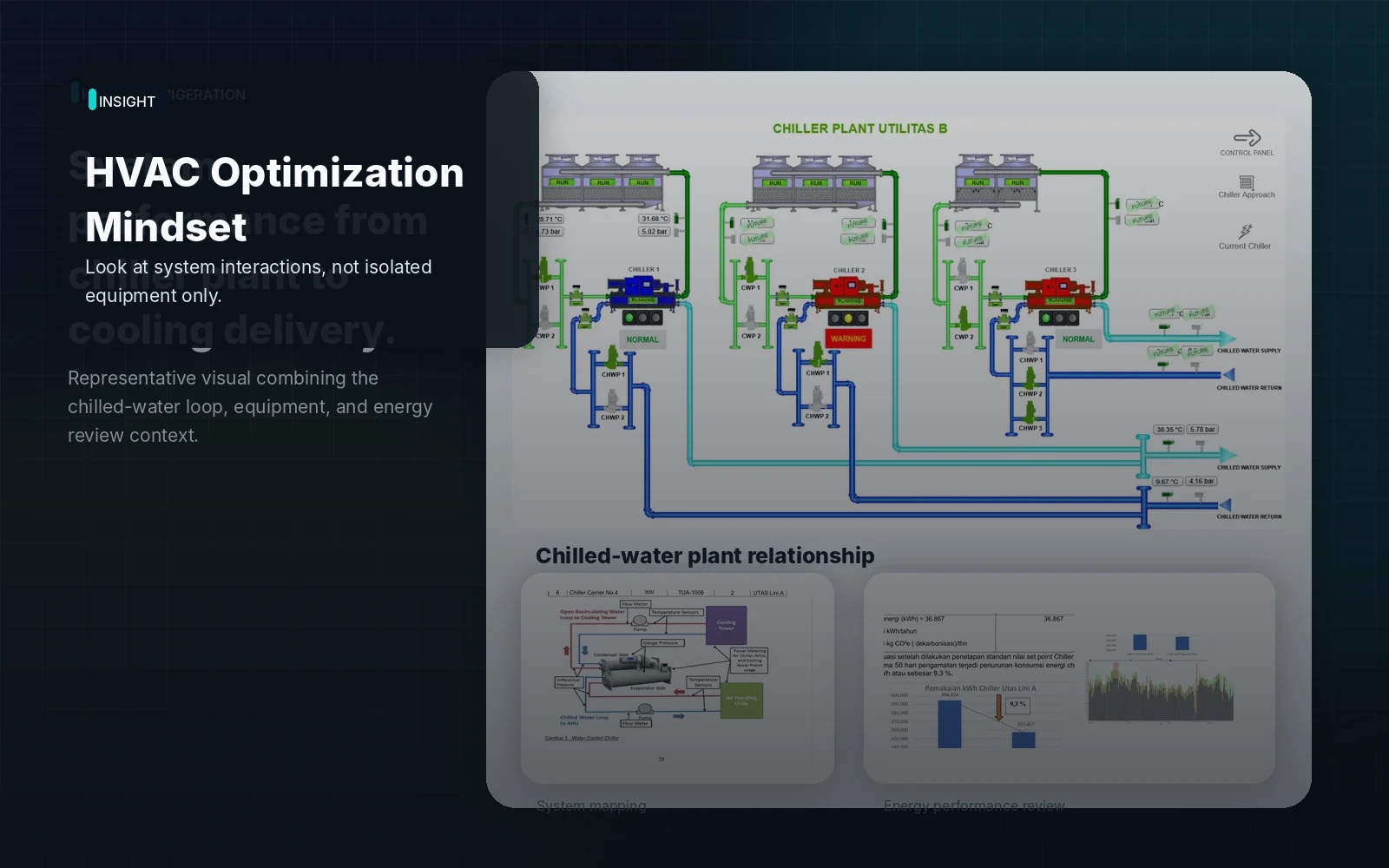
Why system interactions matter more than isolated equipment checks.
Read insightCOP is useful because it connects output with input: how much cooling is delivered relative to the energy required. However, good engineering review does not stop at the equation. It also asks what load the system is serving, how the condenser side behaves, and whether operating settings reflect real demand.
Cooling towers influence condenser performance and, by extension, chiller efficiency. Key attention areas include approach temperature, airflow, water distribution, basin condition, and water quality. Monitoring these well can prevent larger system inefficiencies.
Industrial IoT is valuable when it turns scattered signals into actionable visibility. The value is not in the word “IoT” itself, but in how data moves from sensor, to controller, to network, to dashboard, and finally into engineering decisions.
HVAC optimization is rarely a single-equipment issue. Chiller behavior, tower performance, flow conditions, air-side load, and controls all interact. That is why optimization should be approached as a system problem, not a disconnected checklist.
The insights page is meant to inform and open better engineering conversations.